3 Nov 2026 · @Royson
A study of more than 5,900 Google Ads accounts suggests chasing an Excellent Ad Strength rating can quietly raise your cost per lead. Here is what the data shows and how Indian advertisers should respond.
By [Author name] | Published 3 November 2026 | Updated 3 November 2026 | 6 min read
Key takeaways
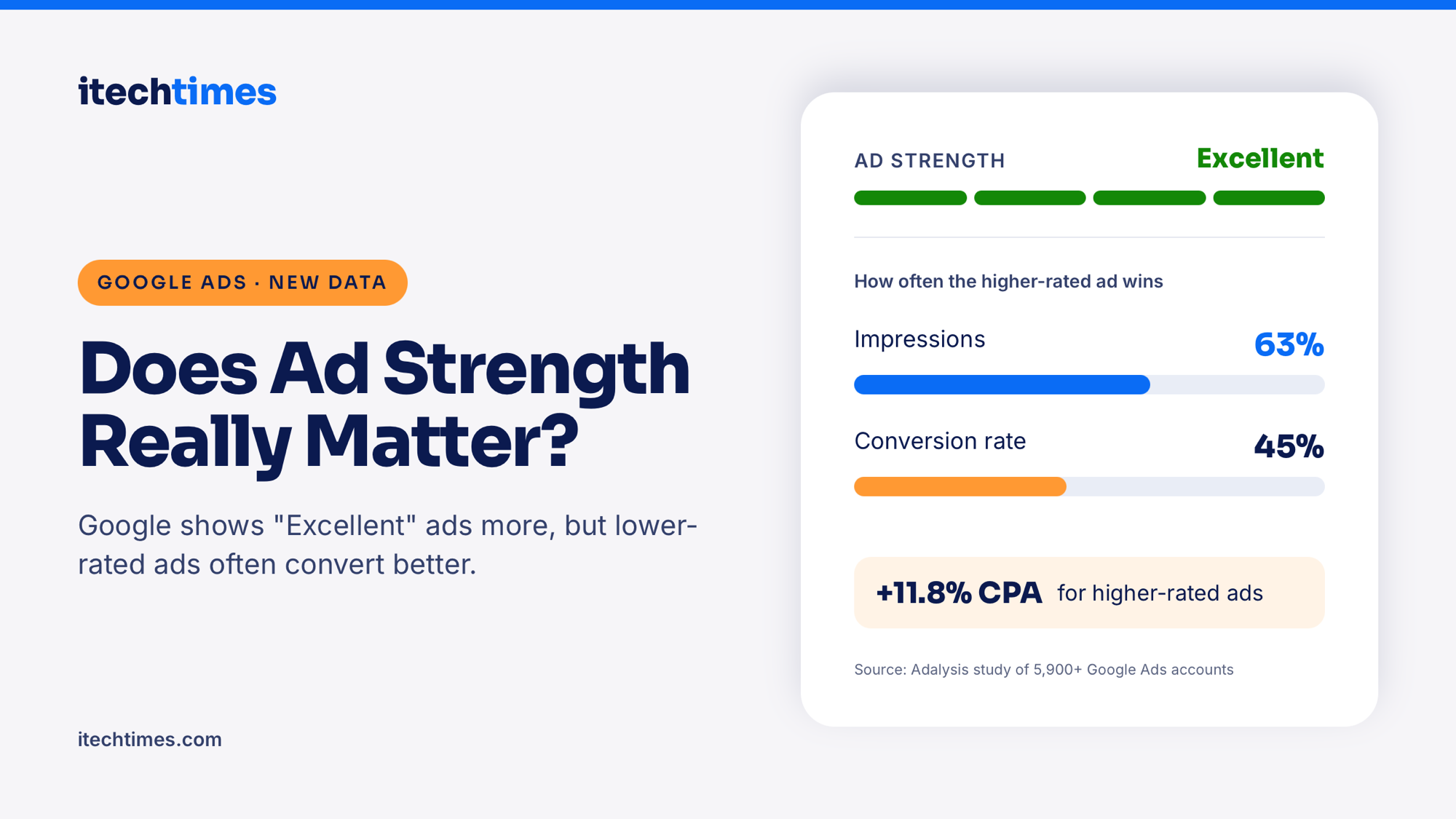
- In ad groups running two responsive search ads (RSAs) with different Ad Strength ratings, Google gave the higher-rated ad more impressions 63% of the time.
- Yet the higher-rated ad had the better conversion rate in only 45% of those ad groups.
- Overall, higher-rated ads came with an 11.8% higher cost per acquisition (CPA).
- Pinning explains much of the gap: pinned ads score lower on Ad Strength but often convert better.
- For unpinned ads, a higher rating generally does pay off, so the fix is to manage pinned and unpinned ads separately.
Does Ad Strength matter in Google Ads? Yes for delivery, but not always for results. New data from Adalysis shows Google tends to serve the ad with the higher Ad Strength rating, yet that ad converts better less than half the time. For Indian businesses paying per lead, that gap can mean spending more for the same number of enquiries.
What is Ad Strength?
Ad Strength is the rating Google Ads gives a responsive search ad, from Poor to Average, Good and Excellent. It measures how relevant, varied and complete your headlines and descriptions are. It is a guide to ad setup, not a measure of how many sales an ad brings in.
Google’s Help Center says Ad Strength doesn’t directly influence an ad’s serving eligibility and is not used to calculate Ad Rank or Quality Score. Ginny Marvin, Google’s Ads Product Liaison, said in March 2024 that it “isn’t used directly in the auction & shouldn’t limit your testing.”
What did the study find?
Adalysis co-founder Brad Geddes analysed more than 5,900 Google Ads accounts, focusing on ad groups with two active RSAs that shared the same keywords, bids and budget but had different Ad Strength ratings. That setup isolates the effect of the rating itself.
Metric
How often the higher-rated ad won
More impressions
63% of ad groups
Higher click-through rate
52.5%
Higher conversion rate
45.1%
Lower CPA
48.5% (the lower-rated ad won 51.5%)
The bigger the rating gap, the more Google favoured the stronger ad. An Excellent ad beat a Poor ad on impressions 78% of the time, and Good beat Average 59% of the time.
On cost, higher-rated ads had an 11.8% higher CPA across all ad groups. In Indian terms, if your lower-rated ad brings leads at ₹500 each, its Excellent-rated rival would cost about ₹559 per lead.
Has this changed over time?
Yes. Adalysis ran a similar study in 2022. Since then, the share of ad groups where the higher-rated ad got more impressions rose from 56.8% to 63%, while its conversion rate win rate stayed flat at around 45%. Geddes says Google “has increased its reliance on ad strength” when deciding which ad to show, though Google maintains the rating is not an auction input.
Both can be true. The rating may not feed the auction, but the variety that earns a high rating gives Google’s system more headline combinations to test and serve.
Why do lower-rated ads convert better?
The answer is pinning. Pinning locks a chosen headline or description to a fixed position, often to keep a legal line, a price or a brand promise always visible. Google lowers Ad Strength for pinned ads because it limits the combinations it can test.
In most mixed-rating ad groups in the study, one ad was pinned and the other was not. Pinned ads scored lower but converted better, because a human chose the most persuasive message. As Geddes puts it, “often, the human ability to create compelling ads will outperform the machine’s ability to serve the ads properly.”
For unpinned ads, the picture flips. CTR and conversions per impression rose with each step up in Ad Strength, so chasing Excellent does pay off there.
How many headlines do you need for Excellent?
- Unpinned ads: Good is possible with as few as 7 assets, but Excellent needs at least 11 different headlines. Even then it is not guaranteed: only 44% of ads with 15 or more headlines reached Excellent.
- Pinned ads: you need at least 10 assets to reach Good. Pinning two or more positions with single assets stops an ad from reaching Excellent.
- Fully pinned ads: if you pin all three headline positions, plan for around 13 assets, with three or more variations per pinned position.
- Position matters: headline one carries more weight than headline two, which carries more than headline three.
What should Indian advertisers do?
- Sort your RSAs by pinning status. Judge unpinned, partly pinned and fully pinned ads as separate groups, not against one another.
- Push unpinned ads to Excellent. Write at least 11 genuinely different headlines covering keywords, benefits, offers, calls to action and trust signals such as “Google Partner” or years in business.
- Rebuild pinned ads, don’t delete them. If a pinned ad wins on CPA, keep it. Add three or more variations per pinned position to lift its rating without losing control of the message.
- Mix languages carefully. Hindi or Hinglish headlines can lift relevance for local searches, but check results by language before pinning one version.
- Judge on CPA and conversions per impression. Give mixed-rating tests extra time, since the lower-rated ad gets fewer impressions and needs longer to gather data.
- Watch peak seasons closely. During Diwali sales, the wedding season or year-end offers, an 11.8% CPA gap on a big budget adds up fast.
The bottom line: treat Ad Strength as a traffic dial you manage, not a score you must win. Your own conversion data, ad group by ad group, is the only rating that pays the bills.
Frequently asked questions
Does Ad Strength affect Ad Rank or Quality Score? No, according to Google. Its Help Center says Ad Strength is not used to calculate Ad Rank or Quality Score and doesn’t directly affect serving eligibility.
Then why do Excellent ads get more impressions? In the Adalysis study, Google served the higher-rated ad more often in 63% of ad groups. The likely reason is that the variety behind a high rating gives Google more headline combinations to serve.
Should I stop pinning headlines? Not if a pinned ad wins on cost per lead. Instead, add three or more variations to each pinned position so the rating improves without losing your key message.
How many headlines does an Excellent ad need? At least 11 different headlines for an unpinned ad, according to the study. Even with 15 or more, only 44% of ads reached Excellent.
Is it worth improving Ad Strength at all? Yes, for unpinned ads. In the study, their click-through rate and conversions per impression rose with each step up in Ad Strength.
What metric should I use to judge my ads? Cost per acquisition and conversions per 1,000 impressions, not Ad Strength. Let tests run longer when the two ads have different ratings.