Delhi Police say attackers slipped into small lenders’ apps, swapped borrowers’ bank details and pushed out loan money through trusted channels, with signs of AI tools in the mix.
Key takeaways
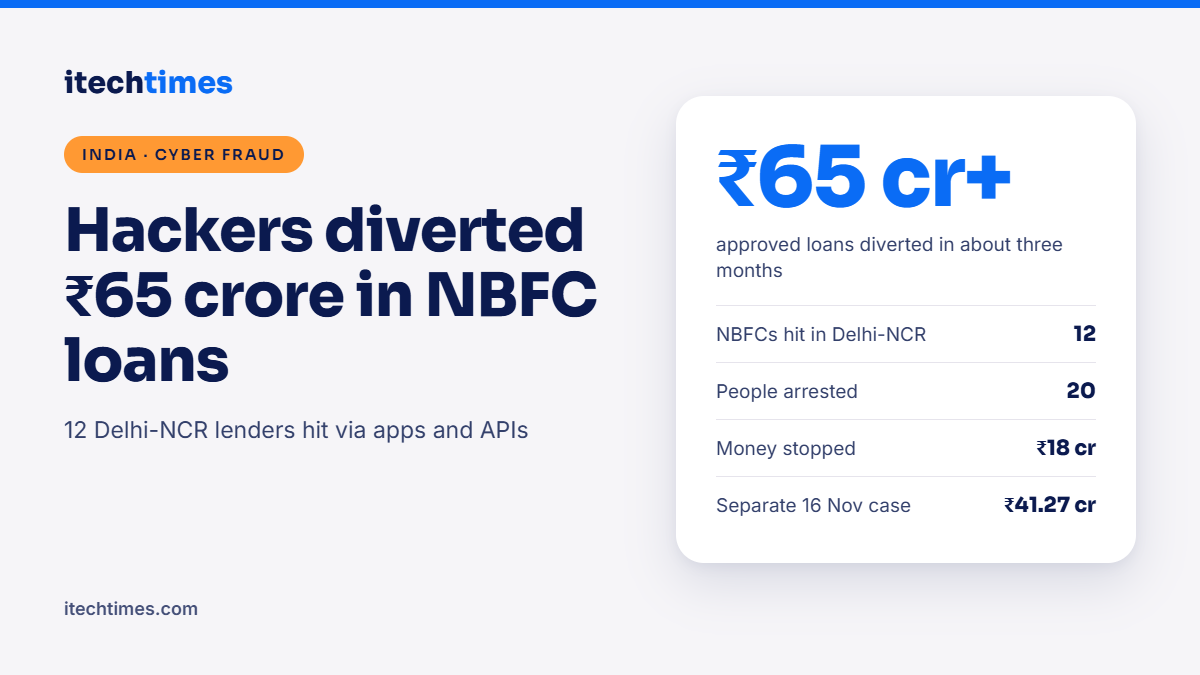
- 12 NBFCs in Delhi-NCR lost more than ₹65 crore in about three months, as per Delhi Police figures reported by the media.
- Attackers targeted loans that were approved but not yet paid out, and replaced the borrower’s bank account with a mule account.
- 20 people linked to mule bank accounts have been arrested, and about ₹18 crore was stopped before it could be withdrawn or turned into crypto.
- Police said they found “traces of AI” in the frauds; one report names a Chinese AI tool used in at least one incident.
- In a separate case, a South Delhi NBFC lost ₹41.27 crore in about 90 minutes on 16 November.
What happened to the NBFCs in Delhi-NCR? Hackers broke into the customer-facing apps of 12 small non-banking finance companies in Delhi-NCR and quietly redirected loans that had been approved but not yet disbursed. More than ₹65 crore went to mule accounts over about three months. Police say weak, publicly exposed systems were the main gap, with AI tools used in some attacks.
How did the NBFC cyber attack actually work?
Police accounts shared with the media describe a simple but effective playbook. The attackers first planted malware in the front-end or customer-facing applications of smaller NBFCs. These apps often run on software that is reachable from the internet and has known weaknesses. Reports say the malware stayed inside some systems for seven to eight days before anyone noticed.
Once inside, the malware hunted for one thing: loans that were already approved but still waiting to be paid out. For each such loan, it swapped the genuine borrower’s bank details with those of a mule account controlled by the gang.
The final step abused trust. According to MediaNama, which cited an Indian Express report, the NBFCs’ firewalls allowed instructions from the cloud servers used by their fintech vendors. Since anyone can rent a server from the same cloud provider, the fraudsters sent disbursal commands from IP addresses the firewall already trusted. The command went through the NBFC’s API to the bank, and the bank paid out instantly.
Where does AI come into this?
A Deputy Commissioner of Police at Delhi Police’s IFSO unit told the media that police had “detected traces of AI” in these frauds, while stressing that the bigger problem was weak public-facing systems at the NBFCs. Reports differ on how far the AI link goes:
- One report from The420.in says an AI-based hacking tool was used in at least one instance.
- The420.in and Lapaas Voice name a Chinese AI platform called CyberStrikeAI, used in an October incident worth about ₹3 crore to send command scripts to a lender’s systems.
- Lapaas Voice notes that AI has not been shown to be behind every attack.
So the fair reading today is that AI helped the attackers in some cases, but the root cause was basic security gaps, not some unstoppable new weapon.
How much did each NBFC lose?
The complaint figures reported by Lapaas Voice, which it says are not audited final losses, show how quickly the attacks picked up from August to November.
| Date (2026) | Amount | Detail reported |
|---|---|---|
| 17 August | ₹12 crore | Hero FinCorp, 300+ transactions |
| 18 to 21 September | ₹2.75 crore | 462 transactions |
| 4 to 6 October | ₹10.59 crore | 1,131 transactions over three days |
| 9 October | ₹10.52 crore | 443 transactions |
| 21 October | ₹12.49 crore | Unifinz, 550 transactions over two days (alleged) |
| 3 November | ₹5.10 crore | Latest in the cluster |
| Total, 12 NBFCs | Over ₹65 crore | About ₹18 crore stopped |
Smaller cases in the same cluster ranged from ₹66 lakh to ₹3.93 crore.
What is the ₹41.27 crore case?
On Monday, 16 November, an NBFC operating from Qutab Institutional Area in South Delhi saw ₹41.27 crore leave its accounts between 1:30 pm and 3 pm IST, spread across at least 96 bank accounts. The company found the transfers during an evening review of its records. Delhi Police’s Special Cell has registered an FIR, and investigators have traced several IP addresses to Hong Kong, though they caution that IPs alone do not prove where an attacker sits. No arrests had been reported in that case at the time of the report, and AI involvement has not been confirmed. This case is reported separately from the ₹65 crore cluster.
Who has been arrested so far?
Police have arrested 20 people. All of them are described as people who opened, sold or arranged mule bank accounts, often in return for a commission. The actual hackers have not been named. This pattern is common in Indian cyber fraud: the people who rent out their accounts get caught first, while the operators stay hidden behind cloud servers and foreign IPs.
Is this part of a bigger trend?
Yes. Reports say these 12 cases sit within more than 150 complaints from NBFCs across India, with nationwide losses reported above ₹300 crore. The same playbook of trusted-channel abuse also showed up in our recent coverage of the PayU payout API breach.
Regulators have been warning for weeks. MediaNama reports that CERT-In issued a “Critical” advisory on 9 October to NBFCs, digital lenders, fintechs and wallets about theft of payment gateway and partner bank API credentials, followed by an advisory on 15 October about AI agents accessing systems without permission. MediaNama also reports, citing another outlet, that the RBI met banks in early November and issued confidential advisories on securing systems and APIs. Those RBI advisories are not public.
What should NBFCs and fintechs do now?
Police and the reported advisories point to a short, practical list:
- Lock down APIs. Do not trust an instruction just because it comes from a known cloud IP range. Use signed requests, mutual TLS and per-partner keys.
- Verify bank detail changes. Any change to a borrower’s payout account just before disbursal should trigger a hold and a fresh check with the borrower.
- Reconcile continuously. Weekly or fortnightly reconciliation gave attackers days of free run. Real-time monitoring of payout instructions closes that window.
- Patch public-facing apps and follow CERT-In advisories, as Delhi Police has urged.
- Watch for unusual volumes, such as hundreds of small disbursals to new accounts in a single day.
What should borrowers do?
If you have a loan approved by an NBFC or a lending app, check that the money reached your own account on the promised date. If it did not, call the lender on its official number at once, not a number from a message or a search ad. If you are contacted to “rent” your bank account for a commission, refuse: that is how mule networks are built, and account holders are the ones police arrest first. You can report cyber fraud on the national helpline 1930 or at cybercrime.gov.in.
FAQs
How many NBFCs were hit in Delhi-NCR?
Twelve NBFCs in Delhi-NCR were hit over about three months, with losses of more than ₹65 crore. These figures come from Delhi Police as reported by several outlets.
Did hackers steal borrowers’ money?
The attackers diverted loan amounts that were approved but not yet paid, so the money that left belonged to the lenders. Borrowers may see delays in receiving their loans while lenders investigate.
Was AI used in the attacks?
Police said they found traces of AI, and one tool, CyberStrikeAI, has been named in reports for an October incident. Reports also say AI was not proven to be behind every attack.
How much money has been recovered?
About ₹18 crore was stopped before it could be withdrawn as cash or converted to crypto. Recovery figures for the ₹41.27 crore South Delhi case have not been disclosed.
Who has been arrested?
Twenty people linked to creating or supplying mule bank accounts have been arrested. The people who ran the hacking operation have not been identified publicly.
Where can I report a cyber fraud in India?
Call the national cyber crime helpline 1930 or file a complaint at cybercrime.gov.in. Report as early as possible, since quick reporting improves the chance of freezing the money.
Sources
- MediaNama: AI-assisted hackers divert Rs 65 cr in approved loans from NBFCs
- The420.in: Cybercriminals defraud 12 NBFCs of over Rs 65 crore in Delhi-NCR
- The420.in: Delhi-NCR NBFC cyber fraud cases
- Lapaas Voice: AI-assisted hackers breach 12 NBFCs in Delhi-NCR
- The420.in: Delhi NBFC loses ₹41.27 crore in cyberattack